What a Biology Teacher Taught Us About Spatial Context
By Tina Schneider
I’ve been following Loui Lord Nelson on LinkedIn ever since I was introduced to her through Beth Stark, who is one of our LiveBinders users and the Co-Founder of LUDIA, the UDL AI Partner. Loui has been posting a lot lately about how critical the environment is to student learning. She champions a powerful mental shift: maybe it’s not that the students can’t learn, but rather, could the learning environment be creating an unintended barrier?
On her June 6th post, she made some thoughtful recommendations:
“Could we:
- offer another way to access information?
- provide additional scaffolds?
- create more opportunities for choice?
- allow a different way to demonstrate understanding?”
When I read these suggestions, I had an epiphany tied to a real story from our early days.
Back when we were sharing our beta version, we worked with a high school freshman biology teacher who has since retired. In those early days, we had a desktop version that was designed for her to present in front of the class from her laptop. Then we created our online version, which she presented at classtime, but also started sharing her binder with her students. When her school introduced a new LMS platform, she naturally switched over to comply with the school’s new tech ecosystem and stopped using the online binder.
By the next fall, she emailed us with a surprising request. She wanted to know if she could start using our tool again because her students were asking for her binder saying it was easier for them to find what they needed.
If you think about it, the exact learning materials were identical on both platforms, but the presentation was entirely different. Her class page was divided into blocks and one side had all of her resources listed. This is typical of what a standard LMS looked like: hyperlinks either listed down a page or pushed through a linear stream format.
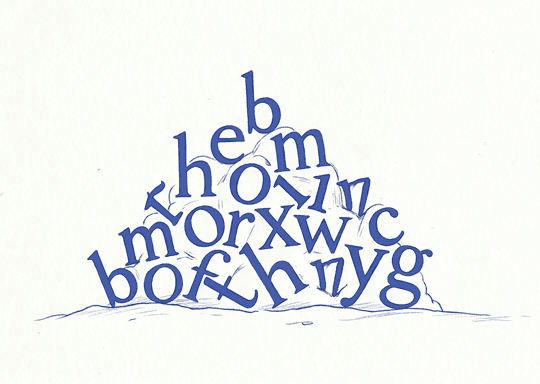
Giving someone access to a resource by way of a generic folder forces them to go down a rabbit hole, or if it’s a streaming channel, they are scrolling quickly through a time warp. Only the teacher knows what each file looks like, why they named it what they did, and how they fit together. The student comes into that folder or streaming channel without any guidance, and the disorientation sets in.
Now you might be saying that a folder can visually list everything that a student needs in order to make a choice. Students can choose to read the list by file names or by having them as thumbnails. The layout shows the objects to choose, but then we wonder why people get lost. It’s not just about the visual, it’s about the quiet way we communicate intention and context. What is the teacher intending us to do here? How do I know what I’m clicking on? What should I look at first?
When you look at those same resources in a binder format, the student enters a closed environment that is rich in context. The binder cover, name, binder summary, and author are instantly evident. The files are organized by tabs with clear titles. The tabs are color-coded and placed in a sequential order, with sub-tabs resting neatly underneath. It never goes too deep. On the tab, the teacher can leave notes explaining what the file is about or what to do with it. Because the file appears directly inside the tab, it is right up front.
Here the intent of the teacher is clear. The binder isn’t sterile; it’s guided. The student feels confident finding what they are looking for. They make a choice and return as often as they want, knowing they can navigate it easily again.
Loui’s post reminded me how much spatial context is innate to how we navigate the physical world. Yet, online environments often make that spatial relationship incredibly hard to communicate. Because of that simple switch to a binder, the students’ autonomy changed from disorientation to clarity.
This brings me back to my last blog post, where I talked about Beth Stark’s brilliant use of the mise-en-place metaphor – the culinary practice of gathering and arranging all your ingredients before you even turn on the stove. Beth described our binders using that metaphor because of the spatial clarity they give a teacher. When you can clearly see where everything is, you can focus entirely on your teaching without worrying about hunting down files. The setup is also highly contextual where every resource placed is in relation to the task, the student, and the teacher’s intent.
This doesn’t mean we need to go out and build a virtual 3D world or a better-looking interactive presentation. Those lead you into a time commitment that keeps you away from your core teaching objectives – being in the classroom responsive, and observant of student learning breakthroughs, barriers, and talents.
In that classroom, all those years ago, the students realized they didn’t have to navigate their schoolwork blindly. They saw an opportunity for genuine autonomy, and they asked for that binder back.